|
British Columbia Prorated (Apportioned) License Plates |
|||||||||||||||||||||||||||||||||||||||||||||||||||||||||||||||||||||||||||||||||||||||||||||||||||||||||||||||||||||||||||||||||||||||||||||||||||||||||||||||||||||||||||||||||||||||||||||||||||||||||||||||||||||||||||||||||||||||||||||||||||||||||||||||||||||||||||||||||||||||||||||||||||||||||||||||||||||||||||||||||||||||||||||||||||||||||||||||||||||||||||||||||||||||||||||||||||||||||||||||||||||||||||||||||||||||||||||||||||||||||||||||||||||||||||||||||||||||||||||||

In 1961, British Columbia joined the Uniform Vehicle Registration Proration and Reciprocity Agreement (also known as the Western Compact). Entry into this Agreement necessitated the issuance of "P" prefix plates (denoting a Prorate vehicle )to allow for the easy identification of vehicles operating under the terms of the Agreement. |
Quick Links: |
| 1962 - 1963 | |||||||
1-digit |
.jpg) |
.jpg) |
|
||||
1-digit |
2-digit |
.jpg) |
|
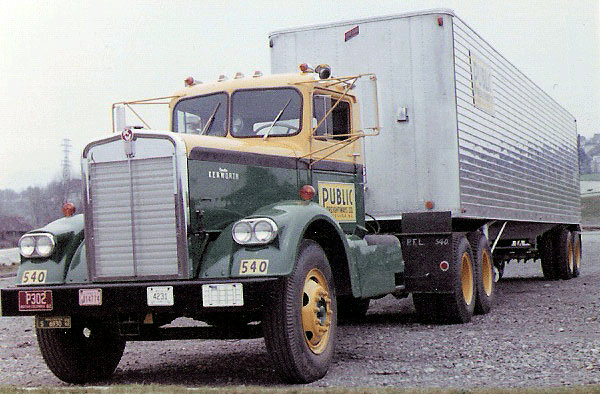 |
In this photo, courtesy of Harry Black and Hank Rabe, a Public Freightways truck is clearly displaying (L to R) a first year of issue - 1962 - Prorate plate (No. 302), along with a 'J' prefix Motor Carrier plate; a 1961 Motive Fuel plate (No. 4231) and a Bingo plate on the front bumper. |
| 1964 - 1971: "Beautiful" Slogan | |||||||
1-digit |
.jpg) |
 |
|
||||
1-digit |
 |
.jpg) |
|
||||
1-digit |
.jpg) |
.jpg) |
|
||||
1-digit |
.jpg) |
3-digit |
|
||||
.jpg) |
2-digit |
3-digit |
|
||||
1-digit |
.jpg) |
.jpg) |
|
||||
.jpg) |
.jpg) |
3-digit |
|
||||
1-digit |
.jpg) |
3-digit |
|
||||
| 1972 - 1978 | ||||||||
.jpg) |
|
|||||||
.jpg) |
|
|||||||
.jpg) |
16,000 block |
17,000 block |
|
|||||
 |
3,000 block |
4,000 block |
|
|||||
.jpg) |
23,000 block |
24,000 block |
|
|||||
.jpg) |
5,000 block |
6,000 block |
|
|||||
.jpg) |
8,000 block |
9,000 block |
 |
|
||||
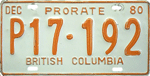
| 1979 - 1980 | ||||||||
10,000 block |
11,000 block |
12,000 block |
.jpg) |
|
||||
14,000 block |
||||||||
| 1979 - The Errant Dot |
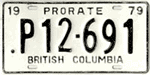 An odd variant appears on the 1979 block of Prorate plates with a "dot" squeezed in before the "P" of the serial, in turn pushing the rest of the numbers over to the right. An odd variant appears on the 1979 block of Prorate plates with a "dot" squeezed in before the "P" of the serial, in turn pushing the rest of the numbers over to the right. |
15,000 block |
16,000 block |
 |
18,000 block |
|
||||
19,000 block |
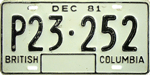
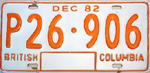
| 1981 - 1984 | ||||||||
20,000 block
|
.jpg) |
22,000 block |
 |
|
||||
24,000 block
|
||||||||
24,000 block
|
25,000 block
|
 |
27,000 block
|
|
||||
28,000 block
|
| 1982 - Competing designs | |
.jpg) |
.jpg) |
it is not clear what prompted the switch in the design of the 1982 Prorate plates shown above, and, based upon known issuing statistics, we can assume that the plate at right is not over-run. |
|
It appears that possibly the first 2,600 plates in the series (i.e. P24-500 to P27-100) employed the same layout seen on the 1981 base, but that around the P27-100 mark a decision was made to re-tinrduce the design first used in 1979 and 1980 for the remaining 1,900 plates (i.e. P27-100 to P28-999). |
|
Oddly, the layout used in 1983 and 1984 would revert back to that which appeared on the first 2,600 plates of the 1982 series ... |
|
29,000 block
|
30,000 block
|
31,000 block
|
32,000 block
|
|
||||
33,000 block
|
33,000 block
|
34,000 block
|
35,000 block
|
36,000 block
|
|
||||
37,000 block
|
| 1985 - 1988 | ||||||||
38,000 block |
39,000 block |
40,000 block |
41,000 block |
|
||||
.jpg) |
||||||||
43,000 block |
.jpg) |
45,000 block |
.jpg) |
|
||||
47,000 block |
48,000 block |
49,000 block |
50,000 block |
51,000 block |
52,000 block
|
53,000 block
|
54,000 block
|
|
||||
55,000 block |
56,000 block |
.jpg) |
58,000 block |
.jpg) |
.jpg) |
.jpg) |
62,000 block |
|
63,000 block |
64,000 block |
65,000 block |
66,000 block |
| 1989 - 1995 | ||||||||||||||
.jpg) |
.jpg) |
.jpg) |
|
|||||||||||
| The International Registration Plan (IRP) |
Sometimes,
we here at BCpl8s.ca like to let others do the talking for
us, and in this instance we believe that Elizabeth Cull, the
former Provincial Minister of Finance (circa 1995), is eminently
qualified to perfom this task. |
What
follows is the description of the International Registration
Plan that the Minister provided to the Legislature on June
20, 1995, when a series of amendments to the Commercial Transport
Act and Social Service Tax Act, necessary to enact the Plan,
were being considered for second reading: |
Hon.
E. Cull:
I just might mention that the Liberal critic has left
the room to talk to the school children from Delta, so I hope
that he will be back before I finish these brief second reading
notes. |
Bill
39 proposes amendments to the Commercial Transport Act and
the Social Service Tax Act to accommodate British Columbia's
membership in the International Registration Plan, known as
the IRP. It is intended that British Columbia become a member
of this plan as of January 1, 1996. The IRP is a multi-jurisdictional
licensing agreement that establishes a single, uniform system
for administering and collecting licence fees and other recurring
fees or taxes from interjurisdictional carriers. |
Under the existing licensing and taxing provisions, multi-jurisdictional carriers are required to license in and pay tax separately to each jurisdiction in which they travel. Under the International Registration Plan, a carrier is only required to license at its base jurisdiction. At the time of licensing, the carrier receives credentials and pays the annual fees and taxes required of all the IRP member jurisdictions in which it will travel. The base jurisdiction collects the fees and taxes on behalf of member jurisdictions. This considerably reduces the administrative costs for carriers in complying with the various licensing and tax requirements of the jurisdictions in which they travel. |
However, the IRP program cannot accommodate the collection of a onetime tax. Therefore, to ensure that B.C. carriers and the province receive the full benefits of IRP membership, Bill 39 proposes amendments to the Social Service Tax Act which will replace the existing onetime 7 percent tax with an annual tax payable each year the vehicle is licensed for travel in the province. The annual tax rates have been set, on average, so that the total amount of tax paid over the lifetime of the vehicle is equal to the onetime 7 percent tax currently paid. This amendment is therefore revenue-neutral to British Columbia. In fact, over time the province may experience an increase in revenue, because IRP membership facilitates increased tax compliance from out-of-province-based carriers. |
Bill 39 also makes a minor amendment to the Commercial Transport Act to exempt extraprovincially licensed trailers from the requirement to obtain a licence for travel in B.C. This parallels the exemption provided to extraprovincial trailers by IRP jurisdictions. |
The proposed amendments benefit multi-jurisdictional carriers because they reduce the administrative costs of compliance with the licensing and tax requirements of the various jurisdictions in which they travel. Carriers will realize some of the tax relief because they will be paying the tax over the lifetime of the vehicle rather than paying the full tax at the time the vehicle is purchased or first licensed for use in the province. The proposal benefits the province because it ensures a vehicle will not be licensed for use in B.C. until the provincial tax is paid. It maintains current levels of tax revenues and ensures that the tax and the licensing fees are collected in an efficient and timely manner. This proposal will benefit the industry, the province and our economy. With that, I now move second reading of Bill 39. |
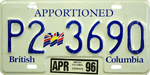
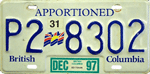
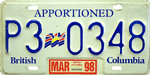
| 1996 - 2010: IRP / "Apportioned" | ||||||||||||||||||||||||||||||||||||
 |
 |
 |
.jpg) |
|
||||||||||||||||||||||||||||||||
*
* * * * |
|
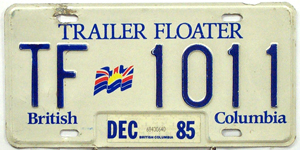
In 1972, the province created two separate types of trailer licence plates; these being a standard “Commercial Trailer” plate which, since 1976, has been identifiable by a single letter suffix (which started at ‘V’). The other was a “Trailer Floater” plate which has always included the name of the plate above the registration number (see example at bottom-left). |
||
“Commercial Trailer” plates are generally issued to an operator based out of British Columbia, while the “Trailer Floater” plate would have been issued to an out-of-province operator, most likely from Alberta. |
|||
When British Columbia joined the IRP in 1996, a condition of the Agreement required the province to allow all trailers being towed by a prorated vehicle, irrespective of where that trailer may have been registered. |
|||
This effectively rendered “Trailer Floater” plates irrelevant, however, they were never phased out and soon were being used by local operators when purchasing new trailers or as a floater plate that could be switched between different trailers depending on the job being performed |
|||
Some operators were even using the plates to skirt the regulations and inspection requirements associated with the issuance of a “Commercial Trailer” plate, but this loophole was eventually closed. |
|||
| The Whoopsie! | |
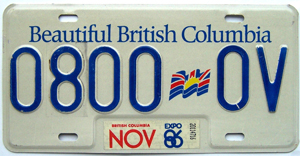
We here at BCpl8s.ca have long heard rumours of a "non-compliant" version of the Prorate plate that was issued shortly after Waldale won the plate contract from ICBC in 2002. Look at the following plate - found on the Francoplaque web-site - and see if you can see the problem: |
|
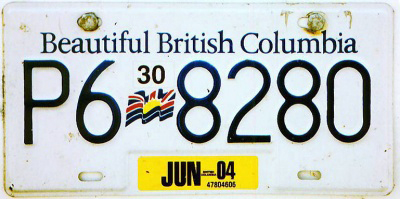 |
Precisely! Someone forgot to include the mandatory reference to this being an "Apportioned" plate (along the top centre) as required under the IRP! We have no idea how many plates were potentially affected by this oversight, or how and when it was even discovered by ICBC staff. Regardless, there exist a small bloc of plates that are missing this key reference and if you happen to come across one of these for your collection, you may want to think about getting it quickly and hanging onto it for a long time. |
*
* * * * |
| Dual Decal Box | |
.jpg) |
.jpg) |
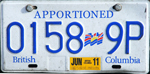
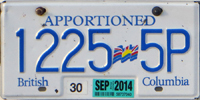
When the "P0-0000" series was exhausted in mid-2010 and flipped to the "0000-0P" serial, the manufacturer again produced the series with the dual-decal well box found on the Olympic passenger plates and Veteran plates. However, as with the introduction of the new Truck plate serial in 2008, this does not appear to be long-lasted as it is reported that these plates are now appearing with the more common single decal box. Why is ICBC being inconsistent with this and not simply applying it to all plates? |
|
| 2010 - present: "0000-oP" | ||||||||||||||||||||||||||||||
 |
 |
|
||||||||||||||||||||||||||||
.jpg)
Quick Links: |

|
© Copyright Christopher John
Garrish. All rights reserved.